
"Central America coffee origins"
2000 article(s) found

Description of characteristic Flavor of Coffee beans in Latin America introduction to Variety Manor by Grinding scale treatment
Latin American coffee bean characteristic flavor description grinding scale method Variety Manor introduction was once the second largest coffee producer only in Brazil, but Colombia, which has been overtaken by Vietnam and ranked third in the world, is the largest supplier of washed beans in the world. Colombia has become synonymous with good coffee after years of image building. Although the flavor is balanced, thick and famous,

History of fine coffee beans in Martinique, the birthplace of coffee beans in Central America
For professional baristas, follow the coffee workshop (Wechat official account cafe_style) Martinique, the cradle of American coffee. Martinique is a small island and the birthplace of Central American coffee, but it produces very little coffee today. The first coffee tree in the Western Hemisphere was created by Gabriel Mathieu de Clieu in the early 1820s.

Introduction to the History of Coffee in Martinique, the birthplace of Coffee in Central America
Professional baristas follow the coffee workshop (Wechat official account cafe_style) Martinique is a small island and the birthplace of coffee in Central America, but it produces very little coffee today. The first coffee tree in the Western Hemisphere was brought from France by Gabriel Mathieu de Clieu in the early 1820s. Good morning, Dirkley.
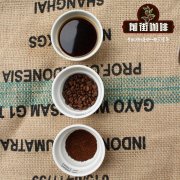
Why does the origin of the basic coffee flavor of the world's three continents affect the taste of coffee?
Where coffee beans come from can greatly affect their flavor. Talking about the basic flavor of the world's three continents, Africa Richard Keane says that when he wants to buy coffee beans from Africa, he is looking for acidity and fruit flavor. Especially in Ethiopia, he focuses on blueberry aromas, as well as as much acidity and fruit as possible. And coffee beans from Kenya, what he wants is Portugal.

Grinding scale of Cuban Crystal Mountain Coffee beans description of the flavor of the manor area
El Salvador (ElSalvador) is one of the small countries in Central America, where coffee is light, fragrant, pure, slightly sour and characterized by excellent balance of flavor. It is a specialty of Central America. With sour, bitter, sweet and other taste characteristics, the best baking degree is moderate, deep. Salvadoran Coffee-Coffee originated in the early 1990s, guerrilla warfare greatly damaged the country's national economy.

A brief introduction to the History and Culture of the Origin and Development of Honduran Fine Coffee beans in Central America
Honduras produces two kinds of coffee of very good quality, which are highly respected by coffee lovers. One is the highland coffee growing at 1000-1500 meters above sea level, and the other is the selected highland coffee growing at 1500-2000 meters above sea level, which represents the highest level in Honduras. Most of the Honduran coffee is exported to the United States and Germany. The granules of coffee beans in Honduras are more shaped than those in Honduras.

Aromatic, authentic Salvadoran coffee estate taste Mercedes Estate Introduction
The coat of arms of El Salvador was adopted on September 15, 1912 and consists of an equilateral triangle with three yellow lines representing equality, truth and justice. Five volcanoes rise from the sea between the Pacific Ocean and the Atlantic Ocean, symbolizing the five Central American countries. The rod of freedom and the red hat of freedom stand high on the summit, radiating the light of freedom and liberation

The balanced taste of Salvadoran Coffee Manor introduces the characteristics of Linus Manor.
El Salvador (ElSalvador) is one of the small countries in Central America, where coffee is light, fragrant, pure, slightly sour and characterized by excellent balance of flavor. It is a specialty of Central America. With sour, bitter, sweet and other taste characteristics, the best baking degree is moderate, deep. The origin of coffee in the early 1990s, guerrilla warfare greatly damaged the country's national economy and increased coffee production from 70 years.
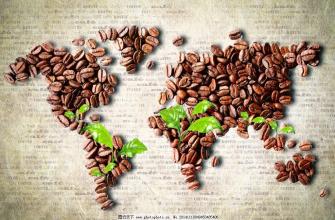
Flavor description of El Salvador Pacamara Coffee Bean
The flavor description of Salvadoran Pacamara coffee beans has obvious floral aroma in the wet aroma of producing area, soft acidity, similar to summer plum soup after entrance, with the taste of lemon and orange peel, and the mellow degree of coffee can be clearly felt in the mouth. Like many beans in Central and South America, there is obvious cocoa flavor in the back, which can be obviously felt after swallowing.
Boutique coffee Salvadoran coffee treatment method half-sun
Salvadoran coffee refers to the coffee produced in the small South American country of El Salvador, where the coffee body is light, aromatic, pure, slightly sour, the flavor is extremely balanced, is a specialty of Central America. With sour, bitter, sweet and other taste characteristics, the best baking degree is moderate, deep. Salvadoran coffee is characterized by balanced taste, good texture, sour, bitter and sweet taste.

Introduction to the flavor of world-famous boutique coffee beans
At present, there are so many kinds of coffee beans imported from all over the world that there is no choice. Here we will introduce the main producing areas and the characteristics of coffee beans as a reference for the selection and purchase of coffee. ■ Brazil (South America), the largest coffee producer, accounts for 1/3 of the global consumption of coffee of all grades and types, and has a place in the global coffee market, although Brazil
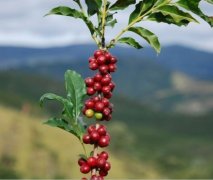
Introduction to the varieties of El Salvador coffee boutique coffee beans
El Salvador (ElSalvador) is one of the small countries in Central America, where coffee is light, fragrant, pure, slightly sour and characterized by excellent balance of flavor. It is a specialty of Central America. With sour, bitter, sweet and other taste characteristics, the best baking degree is moderate, deep. The origin of coffee in the early 1990s, guerrilla warfare greatly damaged the country's national economy and increased coffee production from 70 years.

A brief introduction to the History and Culture of the Origin and Development of Fine Coffee beans in Renas Manor in El Salvador
Quality beans: SHB taste characteristics: sour, bitter, sweet mild El Salvador coffee El Salvador (ElSalvador) is one of the small countries in Central America, the coffee body is light, aromatic, pure, slightly sour, the flavor is extremely balanced, is a specialty of Central America. With sour, bitter, sweet and other taste characteristics, the best baking degree is moderate, deep. The origin of coffee

Fine Coffee Bean Coffee Origin Americas Nicaragua
Americas Nicaragua Nicaragua is located in central Central America, bordered by the Pacific Ocean to the west and the Caribbean Sea to the east. North central highlands, coastal plains to the east, is part of the Central American volcanic belt. The eastern plain is hot and rainy, and has a tropical marine climate. Suitable climate provides a good growing environment for coffee cultivation. (Nicaragua Pacamara species on left, Guatemala on right)
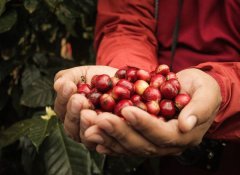
Costa Rica where coffee beans are grown in Central and South America.
Costa Rican coffee cultivation was introduced by Cuba in 1779 and exported for the first time in 1820. There are about 32000 coffee farmers, with an average planting area of less than one hectare (10000 hectares) per farmer. Costa Rica has a population of 41 billion (2006), with a coffee planting area of 82500 hectares and an annual production of 1.7 million bags (60kgs per bag). The annual domestic consumption is 380000 bags.

Honduras, a coffee producing country in Central and North America
Honduras is a mountainous country in Central and North America with a population of more than 8.3 million and an area of about 112,000 square kilometers. Located in northern Central America. It is bordered by the Caribbean Sea to the north, the Gulf of Fonseca in the Pacific Ocean to the south, Nicaragua and El Salvador to the east and south, and Guatemala to the west. More than three-quarters of the territory is mountainous and plateau. Mountains extend from west to east, inland for lava plateau, mountainous

The origin of Guatemalan boutique coffee introduces the unique quality of Guatemalan coffee
Guatemala Antigua Coffee is not only smooth, high hardness, good quality, more full-bodied and sour and sweet perfect match, coupled with a trace of smoke, but also emphasizes its deep and mysterious. Guatemala is located in the center of North and South America, and its geographical location occupies an important position in Central America. Guatemala covers an area of about 108899 square kilometers. The territorial characteristics can be divided into: plateau volcanoes,
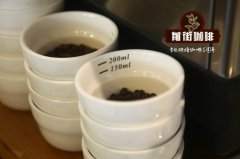
The flavor characteristics of Guatemalan coffee and the flavor description of Guatemala la Minita flower god
Professional coffee knowledge exchange more coffee bean information please follow the coffee workshop (Wechat official account cafe_style) Guatemala is a major coffee producer in Central America, ranking eighth in the world in terms of coffee production. Guatemala, whose name comes from the Mayan language, means thelandofmanytrees, the country of the forest. Located in Central America, it is known as the pearl in the crown of China and the United States. Although the territory of Guatemala
El Salvador, a coffee producer in Central America with a mild taste.
Unique, mild-tasting coffee. El Salvador is one of the small countries in Central America with a dense population. The flavor of its coffee is characterized by excellent balance. Today, this coffee accounts for 40% of the country's exports. 35% of the extra hard beans of the best coffee are exported to Germany from January to March. In the early 1990s, the guerrilla war greatly damaged the country's national classics.

Coffee flavor and taste characteristics of Renas Manor in El Salvador
The Salvadoran flag was launched in 1822, rescinded in 1865 and restored in 1912. The Constitution of the year of the Salvadoran Flag in 1972 was officially established as the national flag. The national flag is rectangular, with a ratio of length to width of 335 to 189. From top to bottom, the flag is connected by three parallel equal horizontal rectangles of blue, white and blue, and the central part of the white part is painted with the national emblem. Because El Salvador used to be